Kirra Pendergast · 26/04/2026 · 5 min read
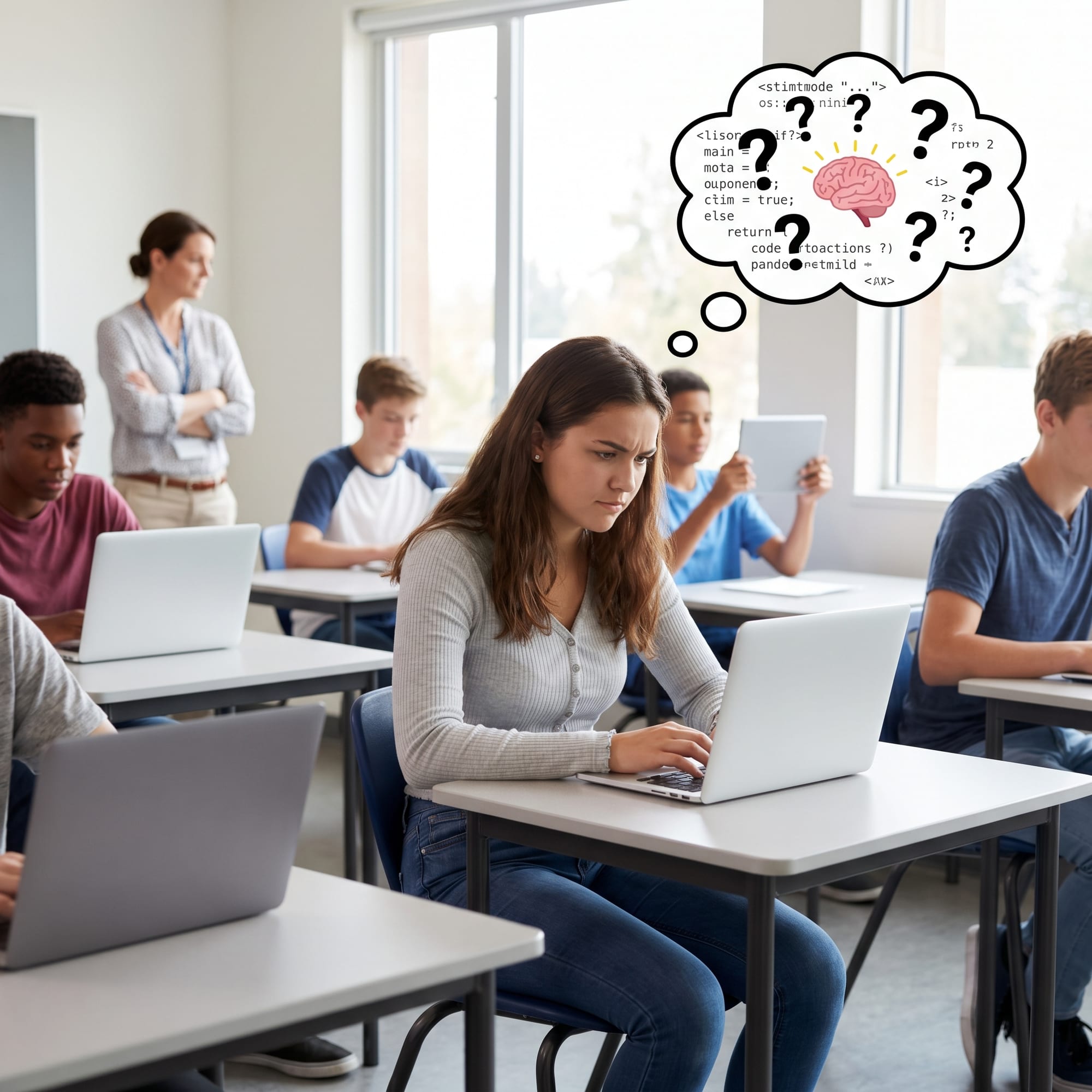
The conversation we are having about artificial intelligence in our schools is not where it needs to be yet, and I think most of us already sense it. We are talking about policies and platforms and what to ban, while our kids are already living it and quietly working it out for themselves.
The truth is, AI is not coming to our classrooms. It is already there. I do not think the question is whether our young people should be using AI. That ship has well and truly sailed. The question I keep coming back to is whether they understand what it is doing to them when they do and do their educators?
Here is what worries me, and I suspect it worries you too. Most are not being taught how to use AI. They are just using it, quietly and inconsistently, and often without anyone in their world having a proper conversation with them about what it is doing to their thinking, their confidence, and the way they are learning to make decisions when no one is watching.
I have been around long enough to know that this is not the first time technology has arrived in faster than we could keep up with it. AI is not simply another tool to add to the lesson plan. It is an environment, and it is already shaping how our young people are coming to understand themselves, their capabilities, and their place in the world. That is not a small thing, and we should not pretend that it is.
And depending on where a child lives, their experience of technology, and now of AI, looks completely different. We talk about digital natives as though all our young people are on the same playing field, when really they are not, not even close. In parts of metro Sydney, Melbourne and The Gold Coast, kids have fast connections, multiple devices, and schools already experimenting with AI in real time, but move outside those bubbles and the picture changes quickly. Across regional and remote New South Wales, Queensland, the Northern Territory, and Western Australia, connectivity drops and access drops with it, and in Tasmania and parts of South Australia there are schools doing extraordinary work despite their infrastructure rather than because of it. There are also communities where digital access exists, but digital literacy does not, where young people are online constantly without anyone in their world ever sitting down with them to talk about how to navigate it safely or critically. Only this past week I watched a Minister for Education posting videos featuring children on their own social media, in a way that genuinely put those young people at risk, because in an age of AI tools, footage of a child is no longer just footage. It can be lifted, altered, and reused in ways most of us are only beginning to imagine. When the adults making decisions about our children's education are still working out what safe looks like in this new environment, we cannot fairly expect our kids, or the families around them, to already be ahead of us.
That is the divide we are not talking about nearly enough, because it is no longer simply a question of access; it is a question of capability, and AI is about to widen that gap further than most of us are ready for. The students who learn how to question these tools and shape them and apply them well will move faster and adapt more easily to the workforce that is coming, while the ones who do not will be quietly locked out of opportunity before they even realise what has happened.
This is not only an Australian story either, because we are already watching some countries invest heavily in AI education and digital infrastructure while others scramble to keep up, and Australia is sitting somewhere uncomfortably in the middle, with the talent and the capability but not yet the consistency to match. Some of our schools are leading and some of our teachers are quietly pushing boundaries, but it is not systemic, it is not scaled, and it is not equitable, and that matters more than I think we have let ourselves admit.
If we do not close this gap, if we do not invest in both access and the understanding to go with it, our kids will be split into a two-speed generation, one group that knows how to work with AI and another that is slowly and quietly replaced by it, and that is not just an education issue, it is a wellbeing issue, a workforce issue, and a national one all at once.
What my team are seeing in classrooms across Australia, and what teachers tell me again and again whenever I am invited to speak at their schools, is that there is real wisdom among our students. Many of them already sense the difference between using AI to refine an idea and handing the whole task over. They are working through the ethics of it on their own, in real time, and often without any adult in the conversation with them. That is a heavy thing for a fourteen-year-old to be carrying by themselves.
At the same time, our kids are watching the world they are about to walk into. They see AI moving into business and law and design and finance and the creative industries, and they are quietly wondering whether there will still be a place for them. That anxiety is real, and we should not be brushing it aside. They are not being dramatic, they are being quietly observant as young people so often are.
What I have come to believe, after sitting with this for a few years now, is that we are framing the problem the wrong way around. We keep treating AI as a policy issue, when it is really a wellbeing issue, a learning issue, and a human behaviour issue all at once. Banning the tools will not build resilient young people. Avoiding the conversation will not help them grow into discerning ones. What we need is something far more practical, and far more loving than that.
They need us to teach them how AI shapes them. How it influences the answers they receive, how it can quietly narrow their thinking without their noticing, and how easy it is to drift into dependence on something that is more than happy to keep doing the work for them. They need us to help them recognise the moment they have stopped thinking for themselves, and to feel confident enough to put the tool down when they need to.
That, more than anything, is the skill we should be building in our schools right now. Not avoidance, not malpractice policy, and not blind adoption, but discernment. And discernment is something young people can absolutely learn, when there are warm and caring adults around them willing to have the conversation properly.
Teachers and school leaders are carrying so much, and the last thing I want to do is hand you another problem to solve on your own. This is exactly why our team loves coming into schools and having this conversation alongside you, with your staff, your students, and the parent community who are often the ones feeling most lost about all of this.
If this piece has stirred something for you, if you are looking at your own school community and thinking that we really do need to be talking about this properly, please reach out. We would be honoured to come and sit with your school, in person or online, and have the kind of grounded, practical, warm conversation that helps everyone, our kids most of all, feel a little more capable of navigating what is in front of them.
AI is here and it is not going anywhere. The only question left, and it is the one that matters most, is whether the young people in our care are going to walk into this future feeling confident and discerning, or whether they are going to be left to figure it out on their own.
More from the journal

9 Oct 2026 · 5 min read
Who is checking that the child is a child?
If device makers become the authority that labels people as children, what stops an adult who wants contact with children from being labelled a child? On current evidence, this is a real gap, and almost no public guidance addresses it.A few years ago, over lunch in London, I sat across from a member of Pornhub’s senior management team. I had come to talk about one thing: the sheer volume of fetishised Roblox content on their platform. Roblox avatars, recorded in-game performing sexual acts, then
8 Oct 2026 · 4 min read
How to Talk to Your Children About Suicide
By George Peterkin - Managing Director of Mind Your Health and Founder SoS BEACON Sadly, conversations about the loss of three very young people has entered a great many Australian homes this past week. The subject has been all over our media, and a news story like this never stays where it started. It travels through social media feeds and school group chats, gathering rumour and half-truths as it goes, until it reaches a child alone with a phone or surfaces as a question from the back seat on