Kirra Pendergast · 02/07/2026 · 3 min read

The way we've shared music has always been a small act of love. You hear a song that cracks you open a little, and you send it to someone with the quiet hope that it might undo them too. That's the sweet version. And Spotify's new messaging feature is being sold to us in exactly that language, a tidy, warm, a place to keep the songs and the people together.
When Spotify added comments to podcasts, plenty of us in the safety world watched a familiar pattern arrive right on schedule. A comment box is never just a comment box to a fourteen-year-old. It becomes a scoreboard. A place where the mean thing gets said in public, where the pile-on starts, where a kid refreshes at midnight to see who agreed with the thing said about them. Every open text field is, for some child somewhere, a door that bullying walks through. Direct messages on Spotify are that same door, just quieter, and harder for a parent to see.
In order to protect kids online we have to look at all side of this. Most teens will send messages to the friends and their will be no issue. Some will use it to include and to exclude. To send the song and the caption underneath it that stings. To keep a conversation running in a place Mum and Dad haven't thought to check, because who on earth polices Spotify? It looks like a music app. That's exactly what makes it easy to overlook.
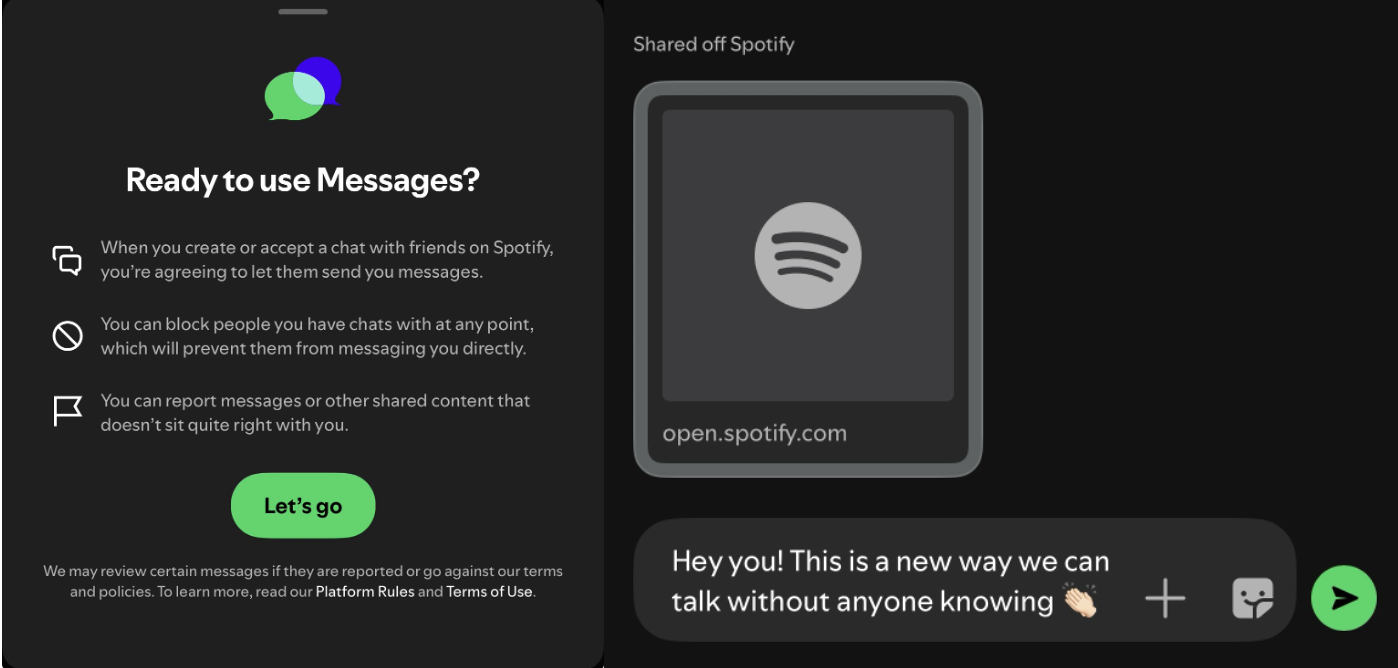
The one place parents should have a quick look at is "Managed accounts" in Spotify's own parental guide. If you don't have time, here are the key things:
Spotify says managed account profiles are "private and not searchable or discoverable," and that they "can't access age-restricted features like Messages." The implication here is actually enormous. If your child is on a managed (paid) account, Messages are off. If they're not , if they're on a standard (free) account , Spotify's guide does not tell you Messages are unavailable. Which means the burden lands, as it so often does, on you to go and check.
A standard youth account may well have access to Messages and other interactive features, and nothing in the guide reassures you otherwise. Assume it's on until you've confirmed it's off.
Managed accounts are shielded because they're private, unsearchable, and can't find other users or join Jams and Blends. Strip those protections away and your child becomes reachable and "reachable" is the whole ballgame when we talk about strangers and grooming.
The risk isn't only in the DMs. Spotify itself tells parents to talk with kids about "the ways in which they are engaging with others," and to be thoughtful about playlist titles, profile photos, playlist artwork, and uploads. Children signal to each other constantly through these things. A playlist title can be a love note, a threat, or an inside joke designed to leave one kid out. The message isn't always in the message. ONe report that I haad a few years back was people changing the names of the playlist as a way to contact minors like a weird kind of messaging, that is now way easier.
And here's what frustrates me about the guidance as it stands. The page waves toward "unwanted content or attention" and points you to reporting but it does not clearly tell you who can message whom, whether a stranger can reach your child, or what blocking and messaging controls you actually get if you're not on a managed account. Those are the exact questions a parent needs answered before the feature arrives, not after something goes wrong.
So my bottom line is simple. Don't raise this directly with your child, we don't want them accessing a feature that they did not know was now available to them because you told them about it. Instead do a random parent audit of their settings and check it by stealth if you can.
If your child is on a standard Spotify account rather than a managed one, be concerned because a managed account is the only place Spotify clearly switches Messages and discoverability off.
Everywhere else, you're on your own to find the setting. It lives under Settings > Privacy and social, and yes, you can turn messages off entirely.
We keep being handed features we never asked for, wrapped in the language of connection. The quiet act of resistance, and of parenting, is knowing where the off switch is, and having the conversation before your kid needs you to.
More from the journal

9 Oct 2026 · 5 min read
Who is checking that the child is a child?
If device makers become the authority that labels people as children, what stops an adult who wants contact with children from being labelled a child? On current evidence, this is a real gap, and almost no public guidance addresses it.A few years ago, over lunch in London, I sat across from a member of Pornhub’s senior management team. I had come to talk about one thing: the sheer volume of fetishised Roblox content on their platform. Roblox avatars, recorded in-game performing sexual acts, then
8 Oct 2026 · 4 min read
How to Talk to Your Children About Suicide
By George Peterkin - Managing Director of Mind Your Health and Founder SoS BEACON Sadly, conversations about the loss of three very young people has entered a great many Australian homes this past week. The subject has been all over our media, and a news story like this never stays where it started. It travels through social media feeds and school group chats, gathering rumour and half-truths as it goes, until it reaches a child alone with a phone or surfaces as a question from the back seat on