Kirra Pendergast · 27/02/2025 · 3 min read
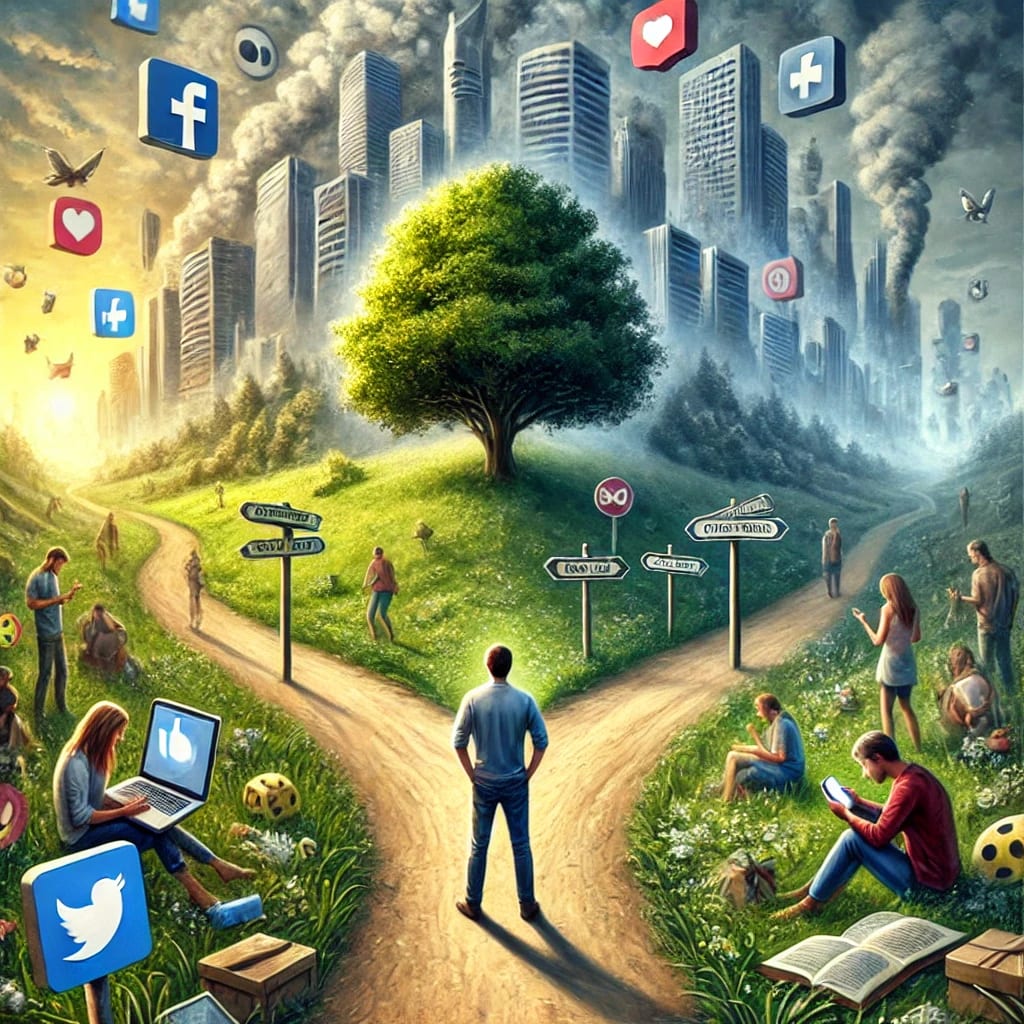

There’s a particular kind of silence that comes when you step away from social media. Not just muting notifications but truly disconnecting. It’s unsettling at first, like walking into a room you forgot you left. The mind, accustomed to the constant hum of updates, arguments, and algorithmic suggestions, twitches for stimulation. But then, something profound happens…….you begin to notice the world again.
The rustling of leaves. The shadows. The colour of an apple. The weight of your thoughts settling in. The long-lost patience for a whole conversation without the impulse to check a screen.
In its current form, social media is more than a mere distraction. It’s a force eroding our ability to be present, think critically, and take meaningful action. It has not only reshaped how we communicate but also how we process reality itself. And in doing so, it fuels the very crises we should be addressing: climate collapse, mental health struggles, and political instability.
Social media platforms thrive on outrage, fear, and impulsivity because these emotions drive engagement, which in turn fuels profits. A slow, thoughtful conversation? That doesn’t go viral. An in-depth examination of a complex issue? The algorithm isn’t interested. What it wants is division, urgency, and compulsive scrolling.
We are trapped in a system that sells us the illusion of connection while isolating us from real human engagement. It numbs us to the urgency of climate collapse, reducing the biggest existential crisis of our time to bite-sized infographics and fleeting hashtags. It exacerbates our mental health crisis, feeding us a relentless stream of comparison, unattainable ideals, and dopamine-driven validation. And it keeps us locked in political polarisation, where outrage replaces real discourse and meaningful change.
All the while, it strips us of the ability to be present in our own lives.
What if the collapse of social media as we know it isn’t a tragedy but an opportunity?
A breaking point that forces us to step away from the algorithm-driven chaos and reclaim a more intentional way of living?
Radical reconnection doesn’t mean rejecting technology altogether, it means rejecting its control over our attention, our emotions, and our sense of reality.
- Relearning deep attention. Reading books, having uninterrupted conversations, allowing ourselves to sit with boredom without reaching for a screen.
- Prioritising real-world activism over performative online engagement. Organising, voting, showing up. Real actions that can’t be reduced to a viral tweet.
- Reclaiming community. Gathering in spaces where conversations unfold organically, without the distortions of algorithms that prioritise conflict over connection.
- Detoxing from the dopamine economy. Teaching ourselves to find joy in the slow, the quiet, the unmonetised moments of life.
So How Do We Talk About This With Young People
For those who have never known a world without social media, this conversation is even more urgent. Young people are often the most immersed in these platforms, yet they are also the ones experiencing the highest levels of anxiety, loneliness, and burnout. The solution isn’t to scold or shame them for their screen time but to engage in honest, meaningful discussions about how social media shapes their lives.
- Ask, don’t lecture. Instead of telling students and young people that social media is ruining their minds, ask them how it makes them feel. Do they feel more connected or more isolated? More informed or more overwhelmed?
- Help them see the design of the system. Explain how algorithms work, how engagement is monetised, and why platforms are designed to be addictive. When young people understand that they are not the problem….the system is…..they become more empowered to make conscious choices.
- Model presence. If we want young people to engage more deeply in the real world, we have to do it ourselves. That means putting our own phones down, prioritising face-to-face conversations, and showing them that there is life beyond the scroll.
- Challenge them (and yourself) to take breaks from social media, even if just for a weekend. Help them notice what changes, do they sleep better? Feel less stressed? Connect more deeply with friends?
The cost of staying plugged into this system is clear. But the reward of stepping away? Presence. Depth. A return to what it truly means to be human. And maybe, just maybe, that’s the reconnection we’ve been waiting for.
More from the journal

9 Oct 2026 · 5 min read
Who is checking that the child is a child?
If device makers become the authority that labels people as children, what stops an adult who wants contact with children from being labelled a child? On current evidence, this is a real gap, and almost no public guidance addresses it.A few years ago, over lunch in London, I sat across from a member of Pornhub’s senior management team. I had come to talk about one thing: the sheer volume of fetishised Roblox content on their platform. Roblox avatars, recorded in-game performing sexual acts, then
8 Oct 2026 · 4 min read
How to Talk to Your Children About Suicide
By George Peterkin - Managing Director of Mind Your Health and Founder SoS BEACON Sadly, conversations about the loss of three very young people has entered a great many Australian homes this past week. The subject has been all over our media, and a news story like this never stays where it started. It travels through social media feeds and school group chats, gathering rumour and half-truths as it goes, until it reaches a child alone with a phone or surfaces as a question from the back seat on